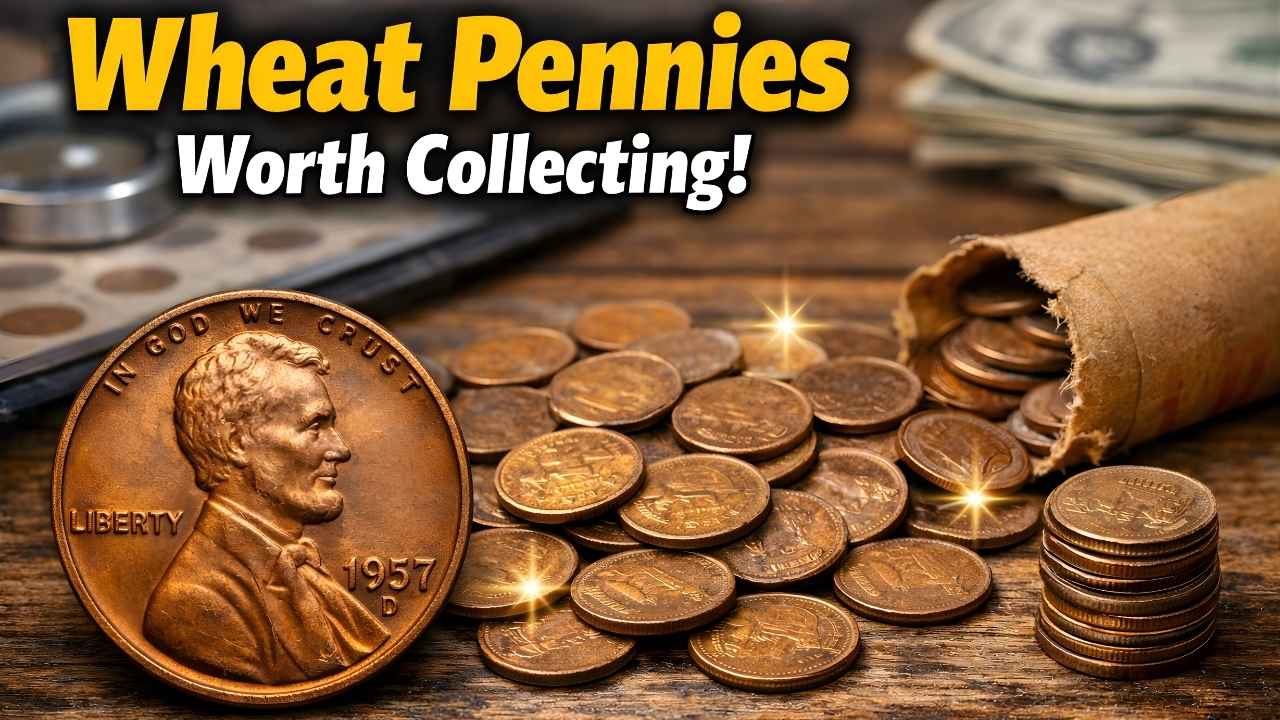
Wheat Pennies Worth Collecting in 2026: Coin collecting has always been a hobby that blends history, art, and the thrill of discovery. In 2026, one of the most exciting areas of focus for collectors is the Lincoln Wheat Penny. These coins, minted between 1909 and 1958, are small pieces of copper that carry immense historical value and sometimes surprising financial worth. Many people still stumble upon them in old jars, inherited collections, or even pocket change, unaware that they may be holding hidden treasures.
The Origins of the Wheat Penny
The Wheat Penny was introduced in 1909 to commemorate the centennial of Abraham Lincoln’s birth. It was the first American coin to feature a real person rather than a symbolic figure, marking a significant shift in U.S. coinage. Victor David Brenner designed the coin, with Lincoln’s portrait on the front and two wheat stalks framing the words One Cent on the back. This design remained in circulation until 1958, when the reverse was changed to the Lincoln Memorial.

The coin’s introduction coincided with a period of great change in America. It witnessed two world wars, the Great Depression, and the postwar boom. Each Wheat Penny is a small artifact of that history, making it more than just currency. For collectors today, these coins are both nostalgic and potentially valuable.
Why Wheat Pennies Hold Value
Not every Wheat Penny is rare or worth a fortune. Many are valued only slightly above face value. However, certain factors make specific coins highly collectible. The year of minting, the mint mark, the condition of the coin, and rare errors all contribute to value. Coins produced in smaller quantities or with unique characteristics are especially prized.

Condition is critical. A coin in pristine uncirculated condition can be worth far more than the same coin that has been heavily worn. Collectors rely on grading standards to determine value, with categories ranging from Good to Mint State. In 2026, professional grading services continue to play a major role in establishing accurate prices.
Legendary Wheat Pennies Collectors Seek
Several Wheat Pennies stand out as legendary finds. The 1909 S VDB penny is perhaps the most famous. With only 484,000 minted, it is one of the rarest and most valuable Wheat Pennies. The initials VDB, representing the designer Victor David Brenner, were placed prominently on the reverse, sparking controversy at the time. The coin was quickly withdrawn, making surviving examples highly sought after.

Another treasure is the 1914 D penny. Minted in Denver, only about 1.2 million were produced, and far fewer survive in good condition today. Collectors prize this coin for its rarity and historical significance.
The 1922 No D penny is a fascinating error coin. Produced in Denver, some coins were struck without the mint mark due to worn dies. This accidental omission created one of the most famous error coins in American numismatics.

The 1931 S penny is another low-mintage coin, with only 866,000 produced. While not as famous as the 1909 S VDB, it remains a valuable addition to any collection.
Discovering Hidden Treasures in Everyday Life
One of the most exciting aspects of collecting Wheat Pennies is the possibility of finding them in everyday life. Though they were last minted in 1958, millions remain in circulation, tucked away in jars, drawers, or inherited collections. In 2026, stories continue to surface of people discovering rare Wheat Pennies in old piggy banks or family coin boxes. The thrill of uncovering a valuable coin in ordinary change is part of what makes collecting so addictive.

The Fascination of Mint Errors
Mint errors add another layer of intrigue. Coins struck off-center, double-dies, or with missing details can be worth far more than their regular counterparts. For example, the 1955 Double Die penny is famous for its dramatic doubling of the date and lettering. Even heavily circulated examples can fetch significant sums. Collectors in 2026 remain on the lookout for such errors, knowing that they can transform a humble penny into a prized possession.
Identifying Valuable Wheat Pennies
For beginners, identifying valuable Wheat Pennies may seem daunting, but a few simple steps can help. First, check the date and mint mark. Coins from San Francisco (S) and Denver (D) often carry higher value than those from Philadelphia, which typically lack a mint mark. Next, examine the condition. Coins with sharp details and minimal wear are more desirable. Finally, look for unusual features such as doubling, missing mint marks, or off-center strikes.

Using a magnifying glass and a good coin reference guide can make identification easier. In 2026, digital resources and mobile apps also assist collectors in quickly evaluating coins. However, professional grading remains the gold standard for determining true value.
The Market for Wheat Pennies in 2026
The coin market in 2026 continues to thrive, with Wheat Pennies playing a central role. Auction houses, coin shows, and online marketplaces see strong demand for rare examples. Prices fluctuate based on supply and demand, but the overall trend shows steady growth. Collectors view Wheat Pennies not only as historical artifacts but also as investments. Rare coins often appreciate in value over time, making them attractive to both hobbyists and investors.

Tips for New Collectors
For those interested in starting or expanding a collection, patience and knowledge are key. Begin by searching through personal change or family collections. Many valuable coins have been discovered this way. Next, consider visiting coin shops or shows, where experts can provide guidance. Networking with other collectors can also be invaluable, offering insights and opportunities to trade or purchase coins.
It is important to store coins properly to preserve their condition. Avoid cleaning them, as this can reduce value. Instead, use protective holders or albums designed for coin storage. Keeping coins in a stable environment free from moisture and extreme temperatures will help maintain their quality.

The Joy of Collecting Wheat Pennies
Beyond monetary value, Wheat Pennies offer something deeper. They connect us to history, to the people who used them, and to the events they witnessed. Each coin is a small piece of the past, carried forward into the present. Collecting them is not just about profit but about preserving heritage. In 2026, as more people discover the hidden treasures in their pockets, the Wheat Penny continues to inspire wonder and excitement.
Conclusion
Wheat Pennies remain one of the most captivating coins for collectors in 2026. Their blend of history, artistry, rarity, and potential value makes them irresistible. Whether you are a seasoned collector or someone who just found a penny in an old jar, the journey of discovery is rewarding. These coins remind us that sometimes the smallest objects carry the greatest stories, and hidden treasures may be waiting right in your pocket.