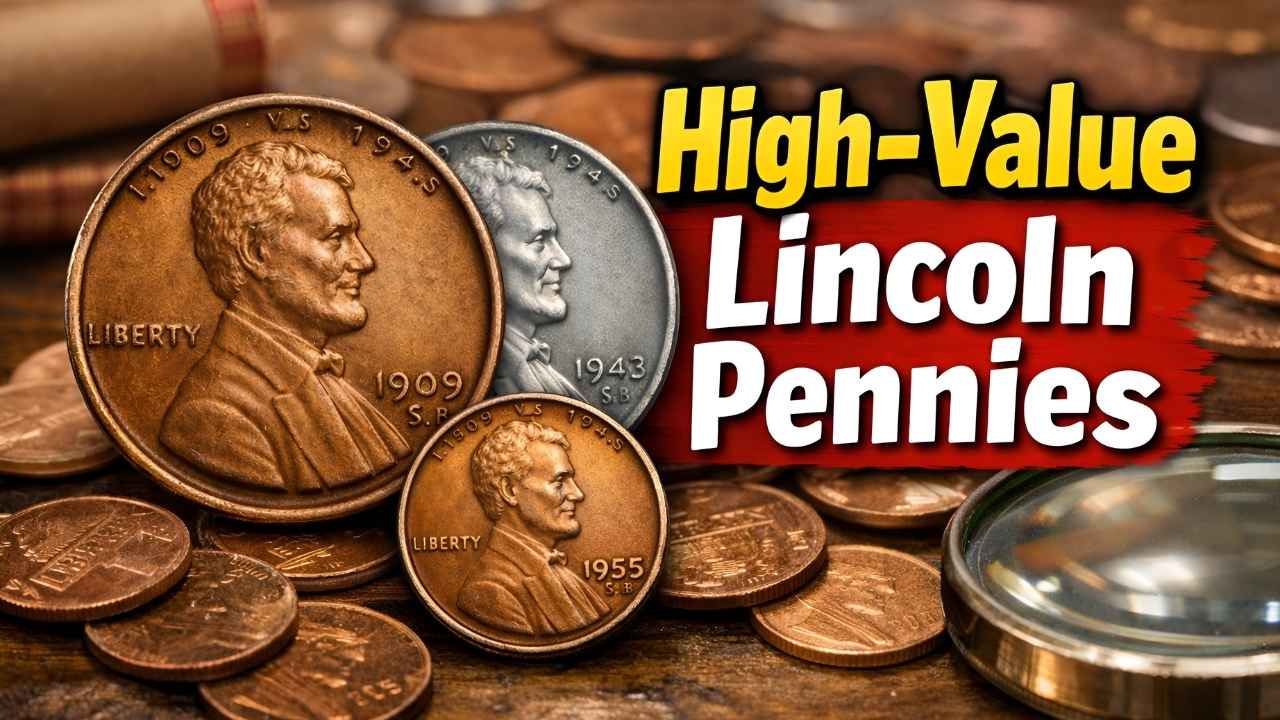
Lincoln Wheat Pennies Value Explained: Coin collecting has always been a fascinating pursuit, blending history, artistry, and the thrill of discovery. Among the most beloved coins in American numismatics are Lincoln Wheat pennies, officially known as Lincoln Wheat cents. First introduced in 1909 to honor the centennial of Abraham Lincoln’s birth, these coins circulated until 1958 and remain a cornerstone of coin collections today. While most Wheat pennies are worth only a few cents, certain rare errors and key dates have become treasures, commanding thousands or even millions of dollars. In 2026, collectors continue to prize these coins for their scarcity, condition, and historical significance.
The Historical Significance of Wheat Pennies
The Lincoln Wheat penny was designed by Victor David Brenner and marked a major milestone in American coinage. It was the first U.S. coin to feature a real person rather than a symbolic figure. The obverse displayed Lincoln’s portrait, while the reverse featured two wheat stalks framing the words “ONE CENT.” This simple yet elegant design gave the coin its popular nickname. For nearly fifty years, Wheat pennies circulated widely, becoming a familiar part of everyday commerce. Today, they are cherished for their historical importance and nostalgic appeal.
Factors That Influence Value
Several factors determine the value of Wheat pennies. Scarcity plays a major role, as certain dates and mint marks are far rarer than others. Condition is another critical factor, with well-preserved coins commanding much higher prices than worn examples. Errors and varieties add another layer of intrigue, with coins that display unusual features often fetching significant premiums. Finally, demand from collectors drives the market, ensuring that rare Wheat pennies remain highly sought after.
The 1909-S VDB Penny
The 1909-S VDB penny is one of the most famous coins in American history. Struck at the San Francisco Mint, it features the initials of designer Victor David Brenner prominently on the reverse. Only 484,000 were minted before the initials were removed, making this coin extremely rare. In 2026, high-grade examples can fetch tens of thousands of dollars, with pristine specimens commanding even more. Collectors prize this coin not only for its rarity but also for its role in numismatic history.

The 1914-D Penny
Another key rarity is the 1914-D penny, struck at the Denver Mint. With a mintage of just over one million, it is scarce compared to other issues of the era. Collectors value this coin for its rarity and historical significance. In high grades, the 1914-D penny can be worth thousands of dollars, making it one of the most sought-after Lincoln Wheat cents.
The 1922 No D Penny
The 1922 No D penny is a fascinating variety created when the Denver Mint accidentally omitted its mint mark. As no pennies were struck in Philadelphia that year, the absence of a mint mark makes this coin unique. Collectors prize it for its rarity and intrigue. In 2026, well-preserved examples continue to command high prices, often reaching thousands of dollars.

The 1931-S Penny
The 1931-S penny is another low-mintage rarity. With only 866,000 struck, it is one of the scarcest Lincoln Wheat cents of the early twentieth century. Collectors value it for its scarcity and historical context during the Great Depression. In high grades, the 1931-S penny can be worth several thousand dollars.
The 1943 Copper Penny
Perhaps the most legendary Wheat penny is the 1943 copper penny. During World War II, pennies were struck in steel to conserve copper for the war effort. A few copper planchets were mistakenly used, creating one of the rarest coins in American history. In 2026, the 1943 copper penny remains a headline-grabbing rarity, with auction prices soaring well over a million dollars.
The 1944 Steel Penny
The 1944 steel penny is another wartime error. After copper returned to circulation, a few leftover steel planchets were mistakenly used. These coins are extremely rare and highly prized by collectors. In high grades, the 1944 steel penny can be worth tens of thousands of dollars.
The 1955 Double Die Penny
The 1955 double die penny is one of the most famous error coins. It shows dramatic doubling on the inscriptions, particularly “LIBERTY” and “IN GOD WE TRUST.” Collectors prize it for its striking appearance and rarity. In 2026, high-grade examples continue to fetch thousands of dollars, making it a must-have for serious collectors.

The 1946 and 1948 Over Mintmark Varieties
Over mintmark varieties, such as the 1946-D over S and 1948-D over S pennies, are fascinating errors created when dies from different mints were repurposed. These coins display visible overlapping mint marks and are highly collectible. In high grades, they can command significant premiums, adding to the intrigue of Wheat penny collecting.
The Role of Condition and Grading
Condition plays a critical role in determining the value of Wheat pennies. Coins are graded on a scale from 1 to 70, with higher numbers indicating better preservation. A coin graded MS65 or higher can command extraordinary prices compared to the same coin in circulated condition. Over the past decade, professional grading services have become increasingly important, providing authentication and standardized evaluations that reassure buyers. As a result, high-grade Wheat pennies have seen the steepest increases in value, with collectors willing to pay premiums for coins that are nearly flawless.

Market Trends from 2016 to 2026
Looking at the ten-year period from 2016 to 2026, Wheat pennies have shown consistent appreciation in value. Common coins in average circulated condition remain inexpensive, but rare varieties have seen dramatic increases. The 1909-S VDB penny, for example, which was valued around $1,000 in 2016 for a mid-grade specimen, climbed to over $2,500 by 2026. The 1943 copper penny, already legendary, saw its auction prices soar from around $250,000 in 2016 to well over $1 million in 2026. These trends reflect growing demand and the enduring appeal of Wheat cents.
Collectors and Investors
The past decade has seen a shift in how people view Wheat pennies. For many, they remain nostalgic collectibles, reminders of childhood coin hunts and family stories. For others, they have become serious investments, with rare varieties offering the potential for significant returns. Auction houses have reported growing participation from investors who see coins as part of a diversified portfolio. This dual appeal, both sentimental and financial, has helped sustain demand and drive prices upward.

Tips for Identifying Valuable Wheat Pennies
For those hoping to discover a treasure among their coins, there are several tips to keep in mind. First, check the date and mint mark, as certain years and locations are far rarer than others. Second, examine the coin’s condition, looking for sharp details and minimal wear. Third, be aware of famous varieties, such as the 1909-S VDB, 1914-D, 1922 No D, and 1943 copper penny. Finally, consider professional grading to authenticate and evaluate the coin. Even common Wheat pennies can be worth more than expected if they are in exceptional condition.
The Future Outlook
As of 2026, the outlook for Wheat pennies remains strong. Demand continues to grow, and rare varieties are likely to see further appreciation. While common coins may not rise dramatically, high-grade examples and famous rarities will remain in the spotlight. Collectors and investors alike are drawn to the combination of history, artistry, and scarcity that Wheat pennies represent. For those who own these coins, the next decade may bring even greater rewards.
Conclusion
The story of Lincoln Wheat pennies is one of enduring appeal and rising value. From the rare 1909-S VDB to the legendary 1943 copper penny, these coins have captured the imagination of collectors and investors alike. Their journey from everyday currency to treasured collectible reflects the broader fascination with numismatics. For those who own rare Wheat pennies, the treasure may already be in hand, waiting to be recognized and appreciated. In 2026, the discovery of such coins could be life-changing, turning ordinary pocket change into extraordinary wealth.