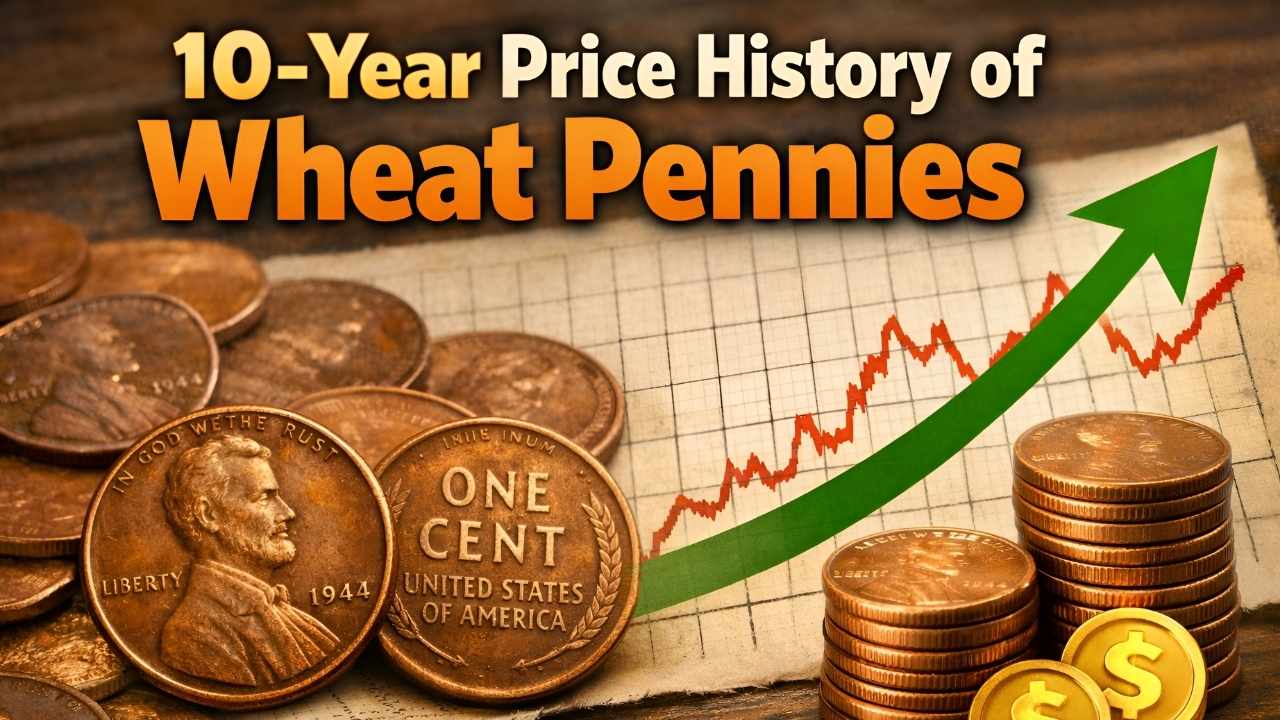
10-Year Price History of Wheat Pennies: Coin collecting has always been a fascinating pursuit, blending history, artistry, and the thrill of discovery. Among the most beloved coins in American numismatics are Wheat pennies, officially known as Lincoln Wheat cents. These coins, minted from 1909 to 1958, feature the iconic portrait of Abraham Lincoln on the obverse and two wheat stalks on the reverse. For decades, they circulated widely, often overlooked as ordinary currency. Yet in recent years, their value has risen steadily, with certain rare varieties commanding impressive prices. Looking back over the past ten years, the price history of Wheat pennies reveals a story of growing demand, scarcity, and appreciation for historical treasures.
The Historical Significance of Wheat Pennies
The Wheat penny was introduced in 1909 to commemorate the centennial of Abraham Lincoln’s birth. It was the first U.S. coin to feature a real person rather than a symbolic figure. Designed by Victor David Brenner, the coin quickly became a staple of American currency. The reverse design, with two wheat stalks framing the words “ONE CENT,” gave the coin its popular nickname. For nearly fifty years, Wheat pennies circulated in everyday commerce, until they were replaced by the Lincoln Memorial design in 1959. Today, they are cherished by collectors for their historical significance and nostalgic appeal.

Factors Driving the Rising Value
Several factors have contributed to the rising value of Wheat pennies over the past decade. Scarcity plays a major role, as fewer coins remain in circulation each year. Condition is another critical factor, with well-preserved coins commanding much higher prices than worn examples. Rare varieties, such as the 1909-S VDB penny or the 1943 copper penny, have always been highly sought after, but their values have surged even more in recent years. Finally, growing interest in coin collecting has expanded the market, bringing new buyers and driving up demand.
Price Trends from 2016 to 2026
Looking at the ten-year period from 2016 to 2026, Wheat pennies have shown consistent appreciation in value. In 2016, common Wheat pennies in average circulated condition were worth only a few cents above face value. By 2020, prices for better-preserved coins had begun to rise, with uncirculated examples fetching several dollars each. Rare varieties saw even more dramatic increases. The 1909-S VDB penny, for example, which was valued around $1,000 in 2016 for a mid-grade specimen, climbed to over $2,500 by 2026. The legendary 1943 copper penny, one of the rarest coins in American history, saw its auction prices soar from around $250,000 in 2016 to well over $1 million in 2026.

The Role of Condition and Grading
Condition has always been a critical factor in determining the value of Wheat pennies. Coins are graded on a scale from 1 to 70, with higher numbers indicating better preservation. A coin graded MS65 or higher can command extraordinary prices compared to the same coin in circulated condition. Over the past decade, professional grading services have become increasingly important, providing authentication and standardized evaluations that reassure buyers. As a result, high-grade Wheat pennies have seen the steepest increases in value, with collectors willing to pay premiums for coins that are nearly flawless.
Rare Varieties That Have Surged in Value
Several rare varieties of Wheat pennies have experienced remarkable price increases over the past ten years. The 1909-S VDB penny, struck in San Francisco with the designer’s initials prominently displayed, remains one of the most famous and valuable. The 1914-D penny, another key rarity, has also seen significant appreciation. The 1922 “No D” penny, created when the Denver Mint accidentally omitted its mint mark, has become increasingly sought after. And of course, the 1943 copper penny, mistakenly struck when leftover copper planchets were used during World War II, continues to capture headlines with record-breaking auction prices. Each of these coins illustrates how rarity and historical intrigue combine to drive value.

Market Forces Behind the Growth
The rising value of Wheat pennies is not just about rarity and condition. Broader market forces have also played a role. The growth of online marketplaces has made it easier for collectors to buy and sell coins, expanding access and increasing competition. Social media and online forums have fueled interest in coin collecting, bringing new enthusiasts into the hobby. Economic factors, such as inflation and the search for alternative investments, have also contributed, as some buyers view rare coins as a hedge against uncertainty. Together, these forces have created a vibrant market where Wheat pennies continue to rise in value.
Collectors and Investors
The past decade has seen a shift in how people view Wheat pennies. For many, they remain a nostalgic collectible, a reminder of childhood coin hunts and family stories. For others, they have become serious investments, with rare varieties offering the potential for significant returns. Auction houses have reported growing participation from investors who see coins as part of a diversified portfolio. This dual appeal, both sentimental and financial, has helped sustain demand and drive prices upward.
Tips for Identifying Valuable Wheat Pennies
For those hoping to discover a treasure among their coins, there are several tips to keep in mind. First, check the date and mint mark, as certain years and locations are far rarer than others. Second, examine the coin’s condition, looking for sharp details and minimal wear. Third, be aware of famous varieties, such as the 1909-S VDB, 1914-D, 1922 No D, and 1943 copper penny. Finally, consider professional grading to authenticate and evaluate the coin. Even common Wheat pennies can be worth more than expected if they are in exceptional condition.
The Future Outlook
As of 2026, the outlook for Wheat pennies remains strong. Demand continues to grow, and rare varieties are likely to see further appreciation. While common coins may not rise dramatically, high-grade examples and famous rarities will remain in the spotlight. Collectors and investors alike are drawn to the combination of history, artistry, and scarcity that Wheat pennies represent. For those who own these coins, the next decade may bring even greater rewards.

Conclusion
The ten-year price history of Wheat pennies tells a story of rising value, driven by rarity, condition, and growing demand. From common coins worth only a few cents to legendary rarities fetching millions, Wheat pennies have captured the imagination of collectors and investors alike. Their journey from everyday currency to treasured collectible reflects the enduring appeal of numismatics. For those who own Wheat pennies, the treasure may already be in hand, waiting to be recognized and appreciated.